We are renewing a DN300 water pipe in Singapore from the inside, using a UV-cured liner. The work is done between small access pits, one length at a time, so the pipe does not have to be dug up along its route.
For a pipe that carries water, the liner material matters as much as the method. The liner we use is certified to SS 375, the Singapore Standard for non-metallic materials and products in contact with water intended for human consumption. The standard covers how a material affects the water's odour, flavour and appearance, and whether it supports the growth of microorganisms.
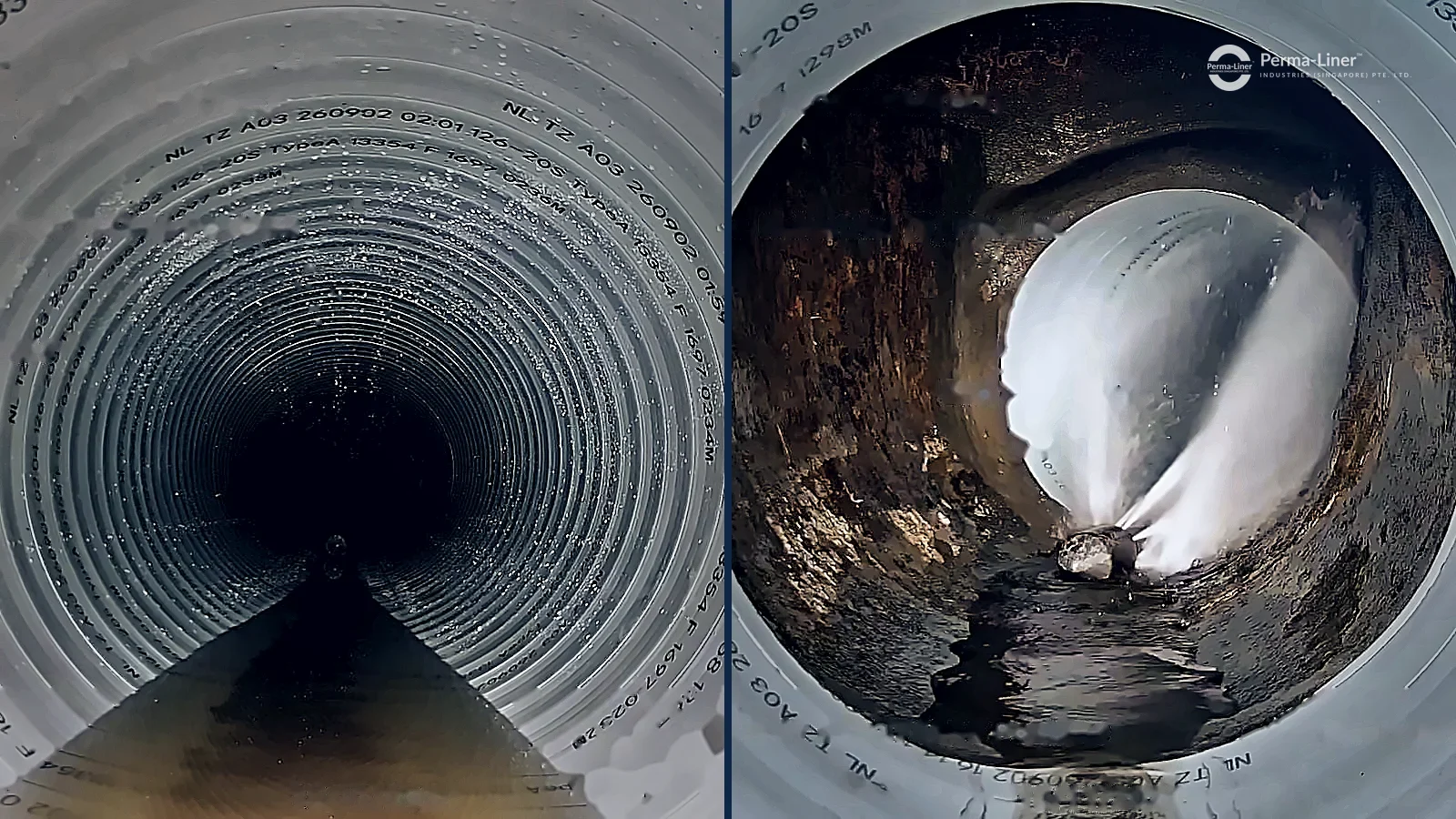
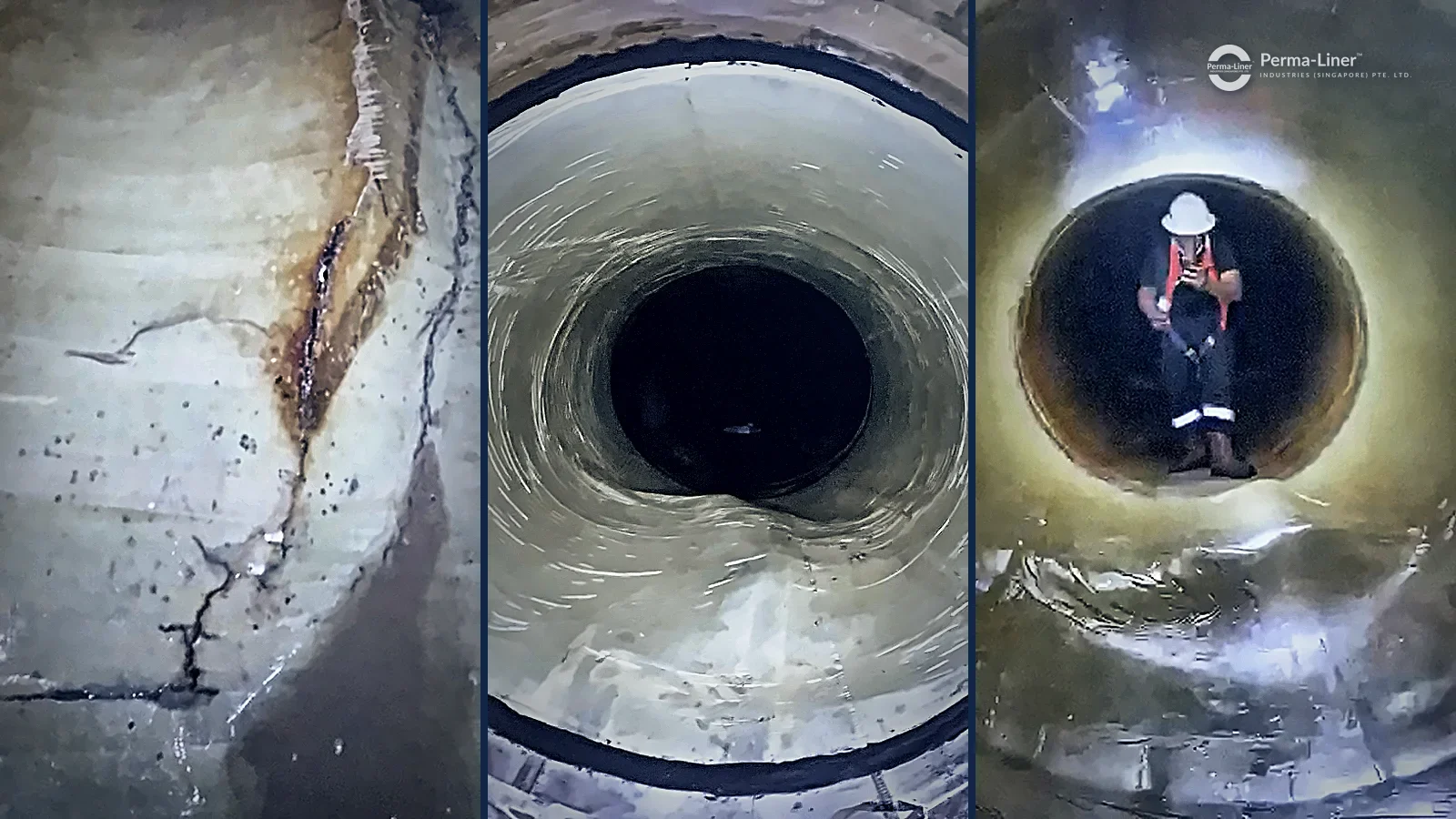
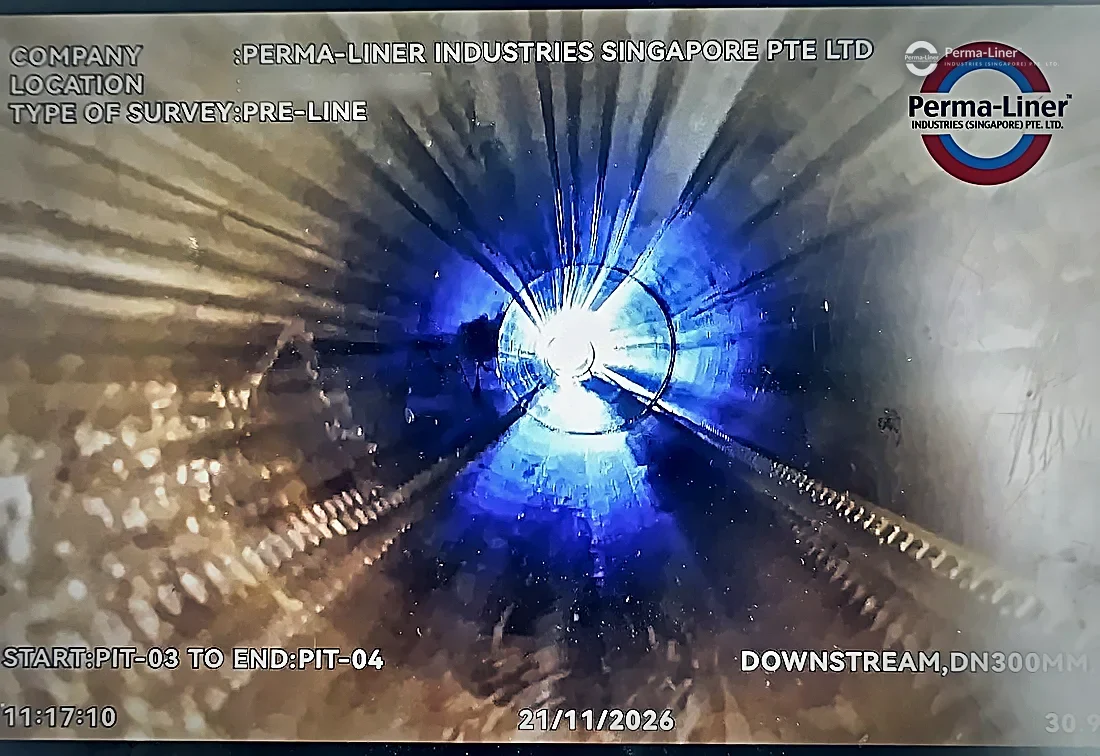
Every length starts with a CCTV survey. The camera travels from one pit to the next and records the condition of the host pipe before lining, logged against distance. The survey confirms that the pipe is clean and ready, and gives the client a record of its condition before the work.
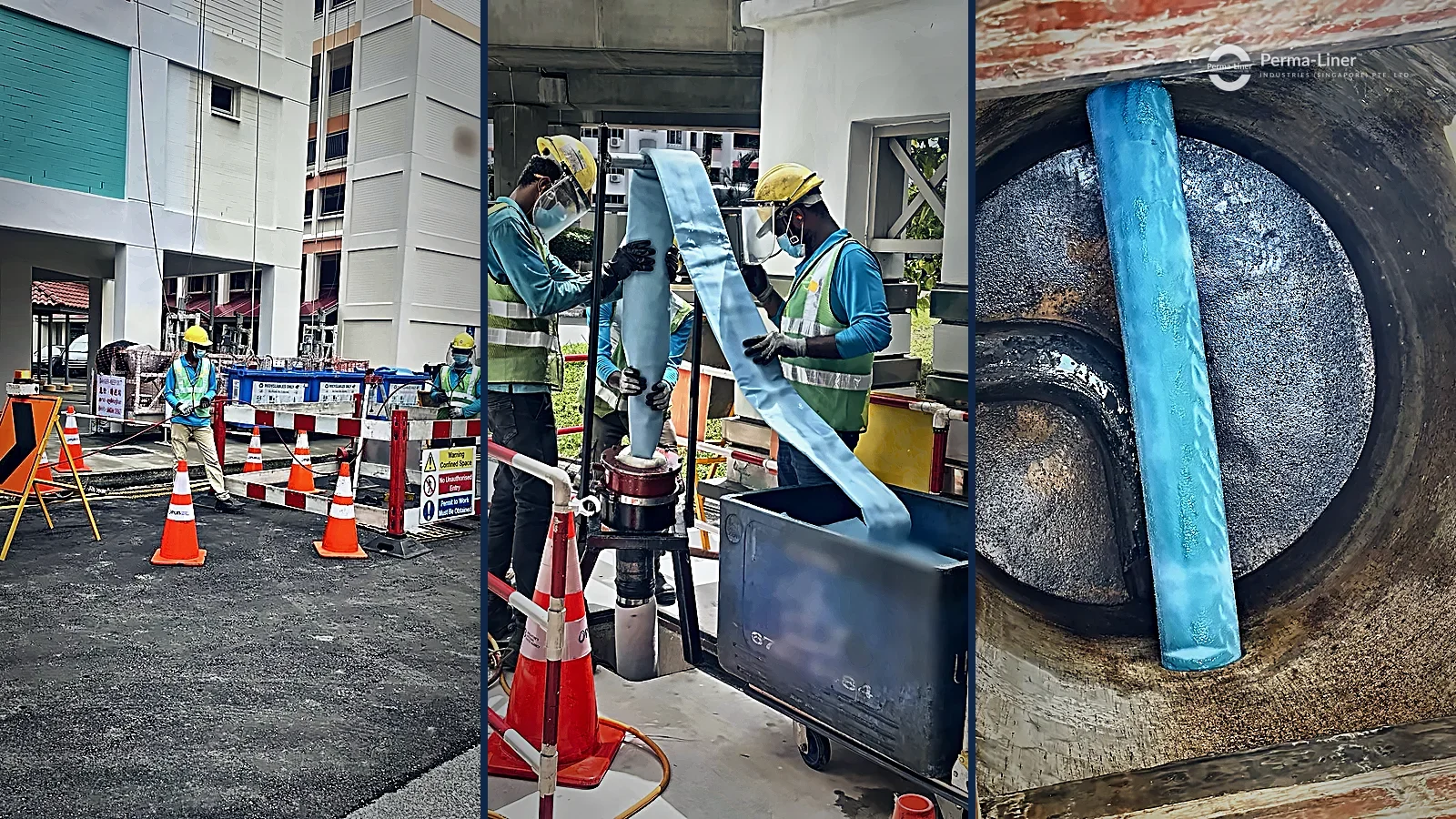
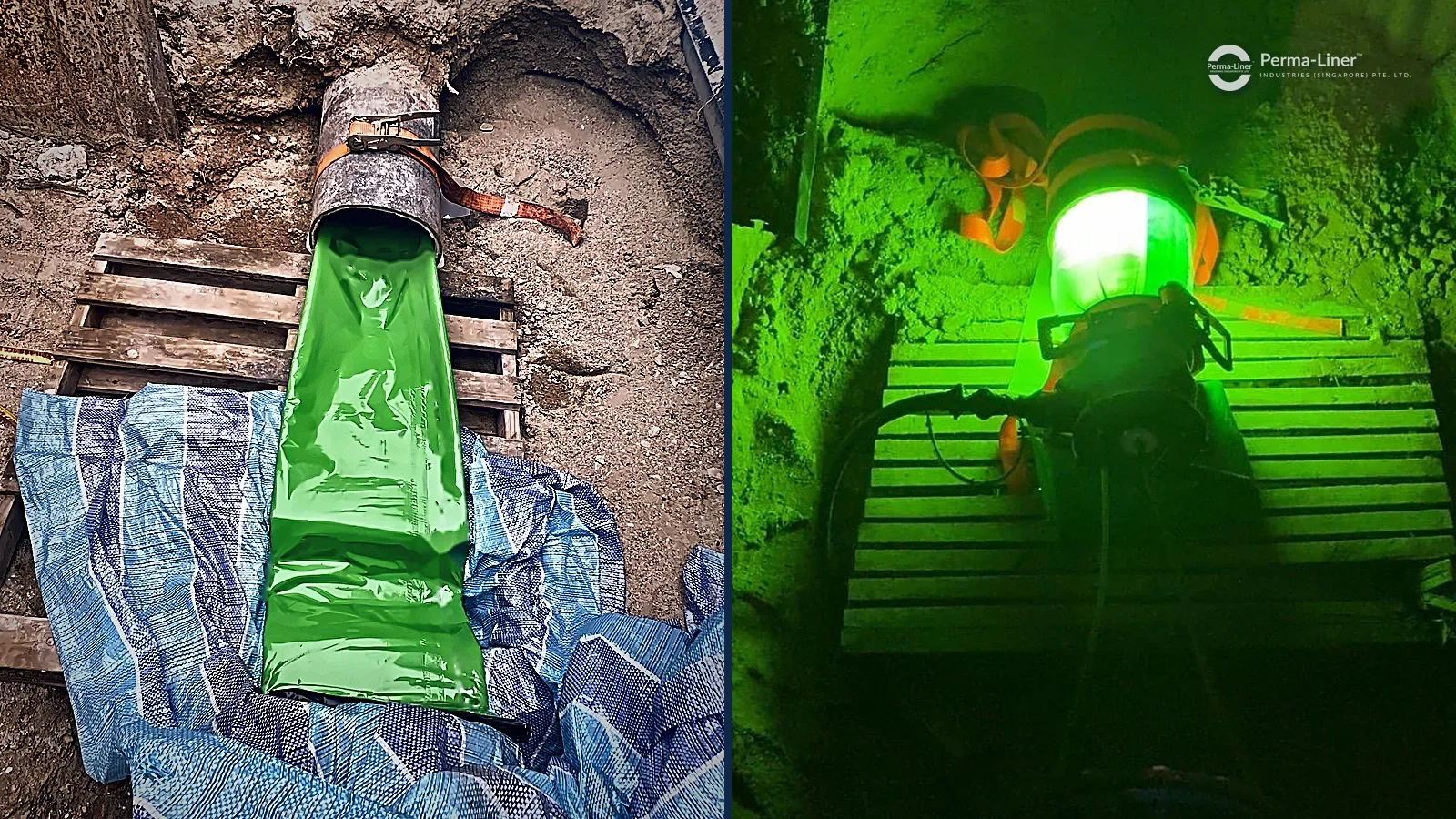
The liner arrives on site ready to install. At the launch pit it is pulled into the host pipe over a protected work area, so it stays clean and undamaged on its way in.
Once the liner is in place, it is inflated against the pipe wall. A UV light train is then drawn slowly through it. The UV light cures the resin and turns the soft tube into a hard, close-fitting new pipe inside the old one.
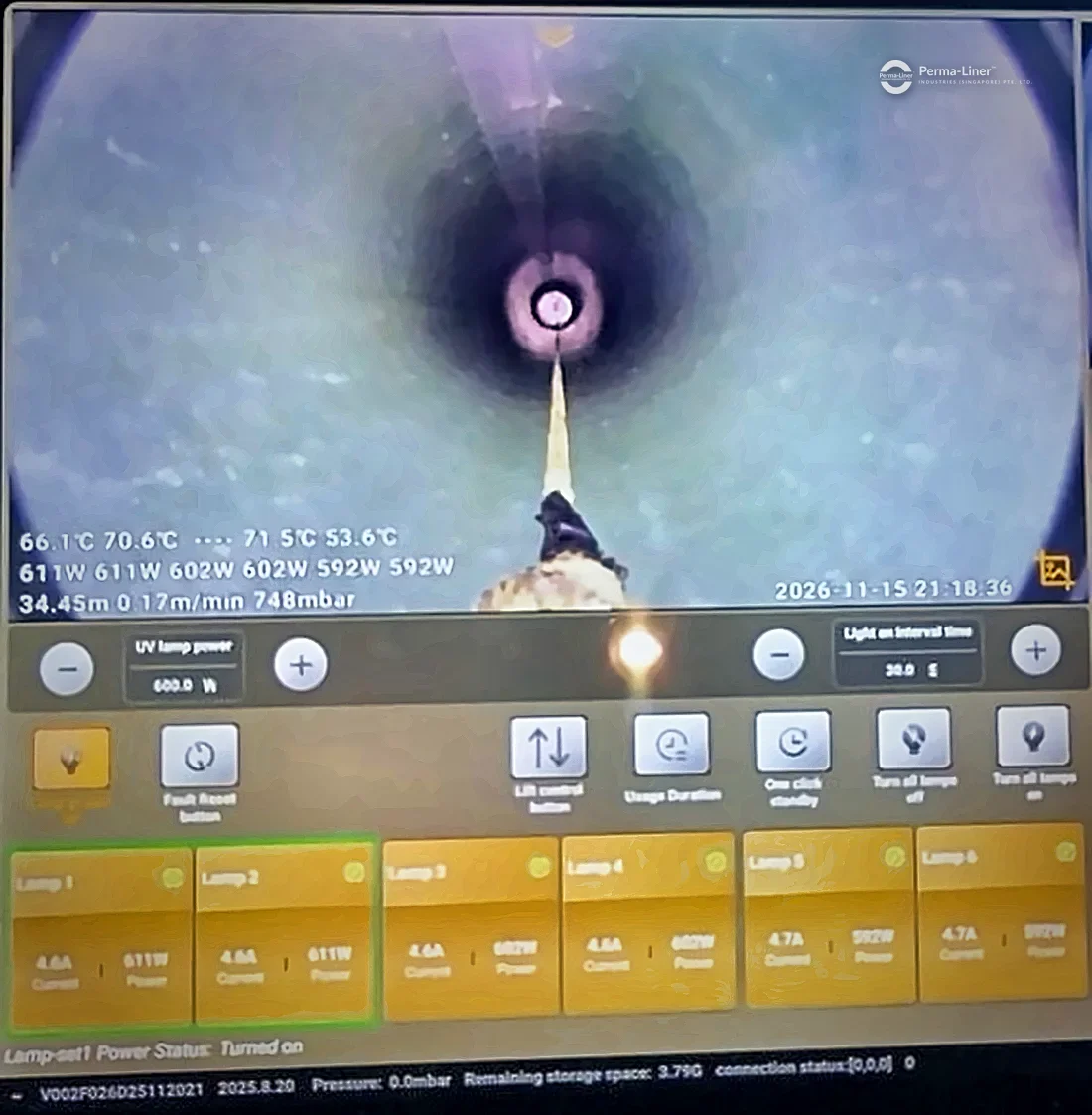
The cure is controlled and recorded from the surface. A camera on the light train shows the inside of the liner live, while the control screen tracks the power of each lamp, the temperature of the pipe wall, the pressure inside the liner and the speed of the light train. Every length has a cure record.
With the ends finished and the pipe reconnected, the line goes back into service with a smooth new bore. The only excavation is at the pits.
If you have a water pipe that needs renewing, talk to us about whether UV lining is the right method for it.
Figures are taken from the project records. Client and site names are withheld.