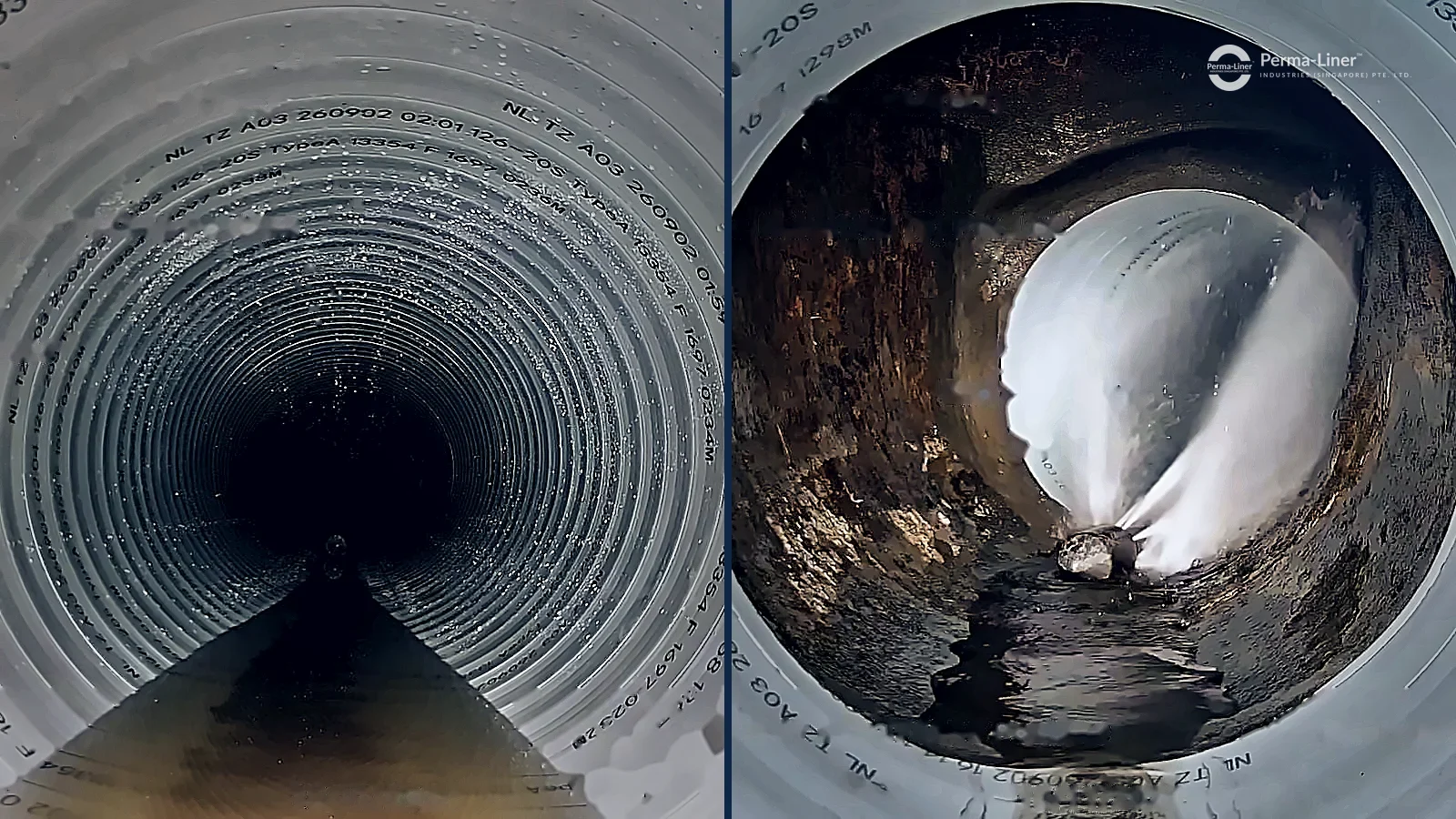
Most CIPP lining is done one length at a time, from one manhole to the next. On this sewer rehabilitation job in Singapore this year, we lined two lengths in a single installation. The liner ran straight through the intermediate manhole between them.
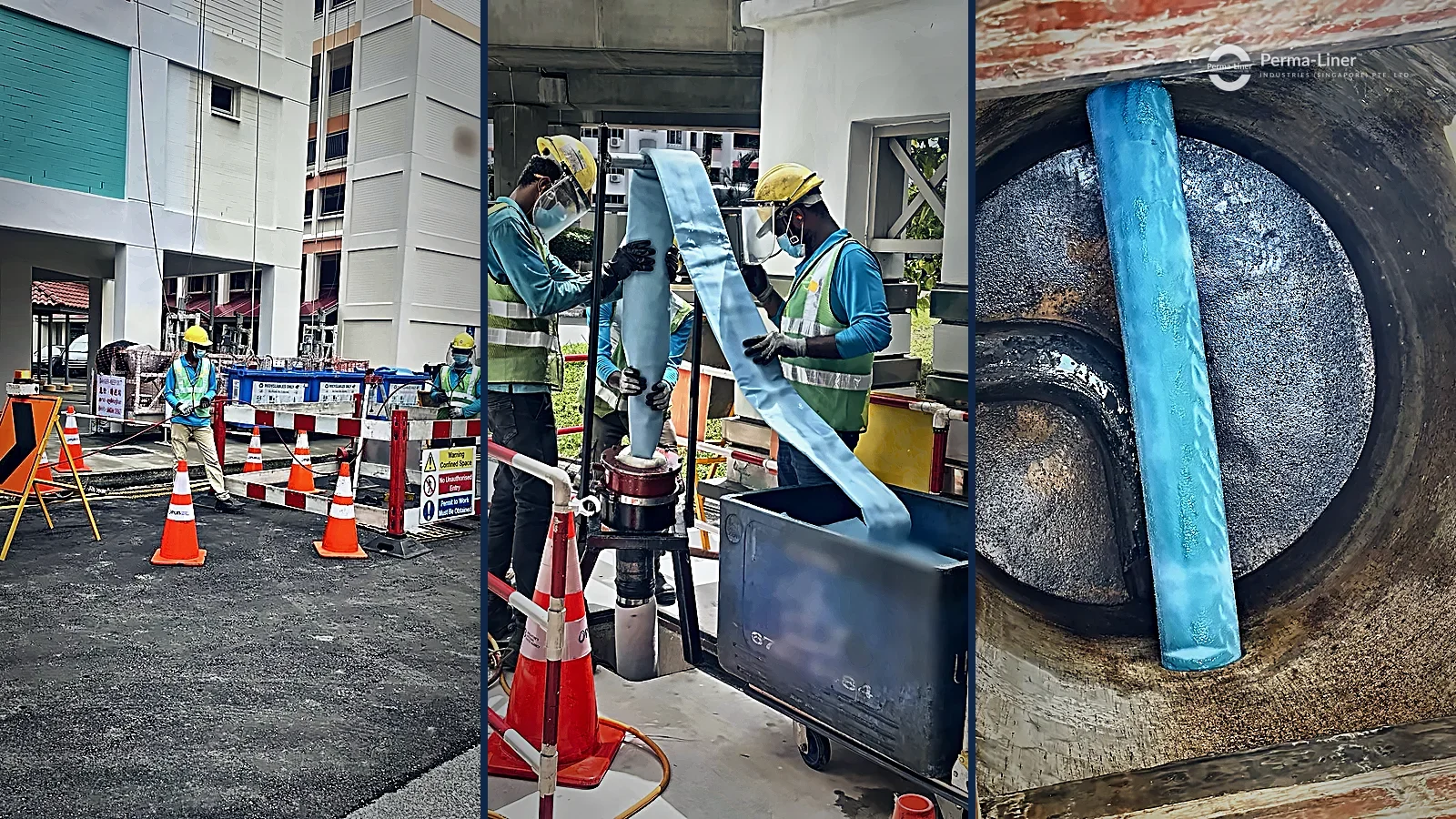
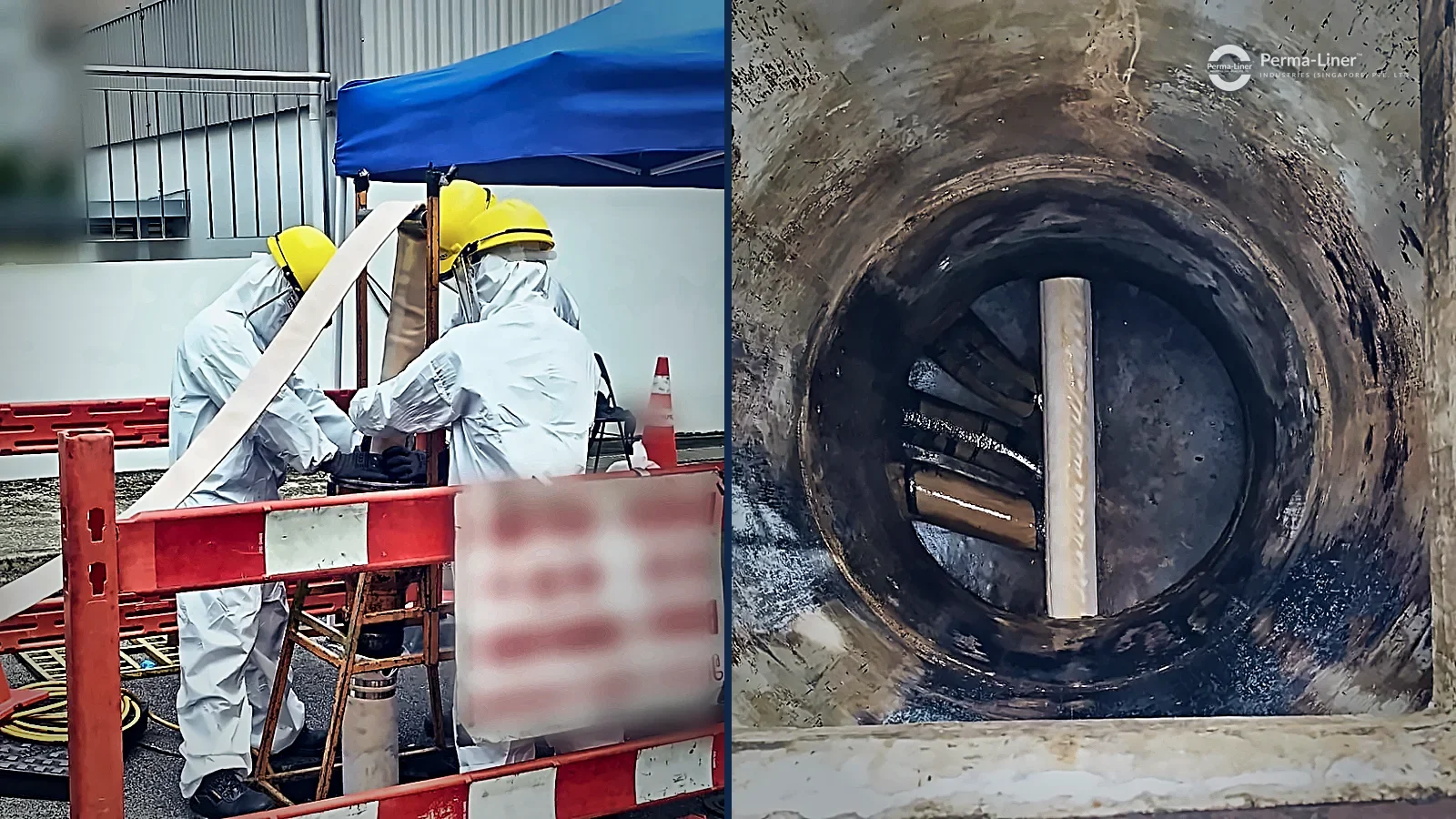
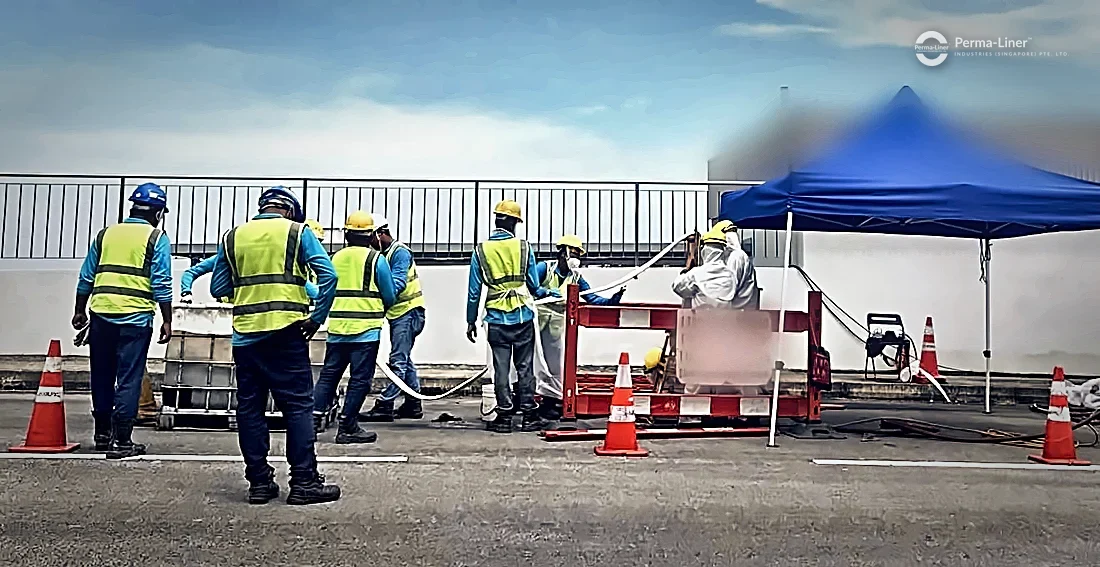
The liner was wetted out with resin on site, at the work front, and installed by inversion. It went in from the launch manhole and was turned inside out as it travelled along the pipe, pressing the resin-filled tube against the host pipe wall. When it reached the intermediate manhole, it carried on through the chamber and into the second length, all the way to the far manhole.
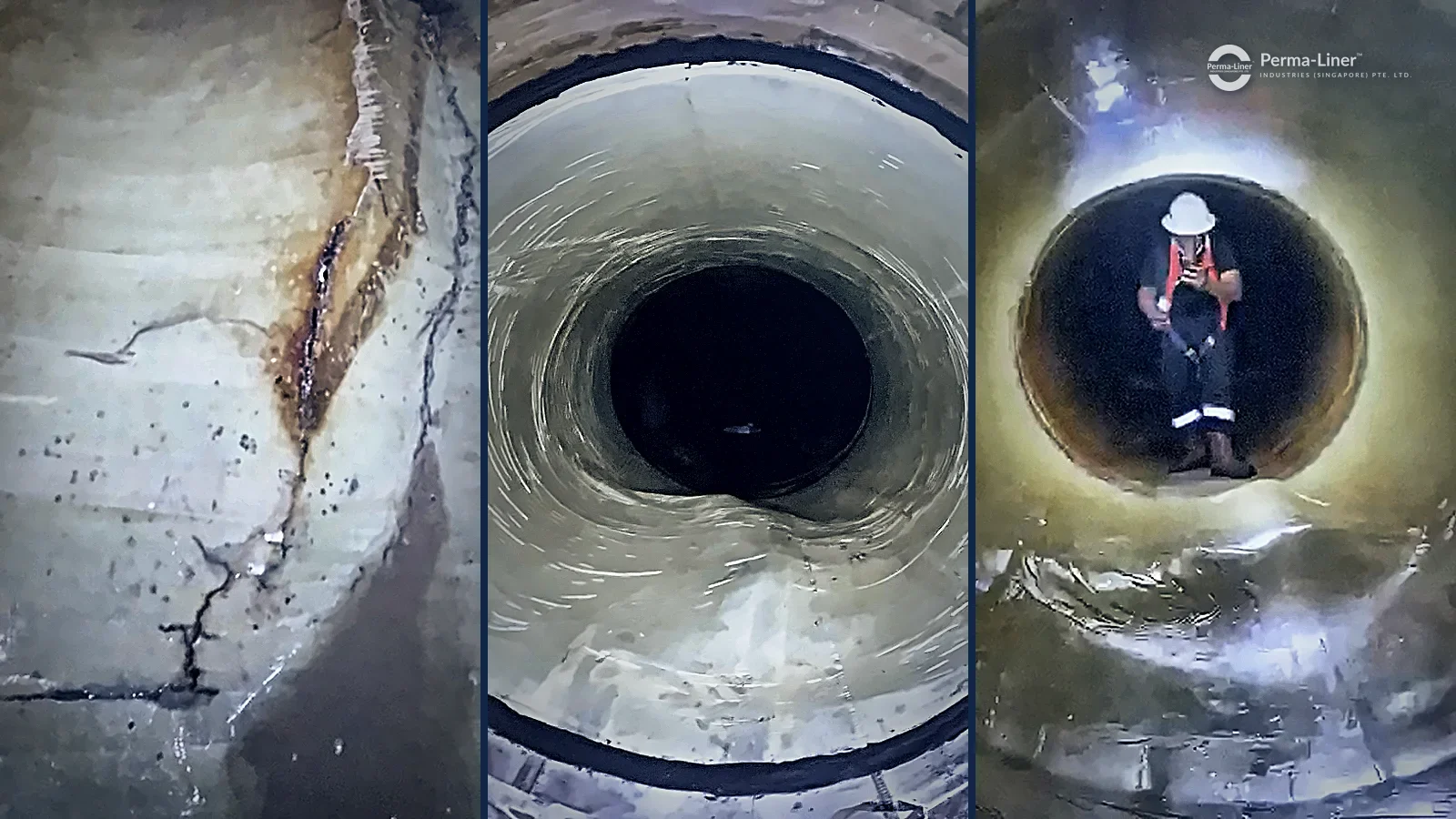
Lining both lengths in one go means one set-up, one inversion and one cure instead of two. There is less time at the work front, fewer liner ends to seal, and a continuous, jointless liner across the whole run.
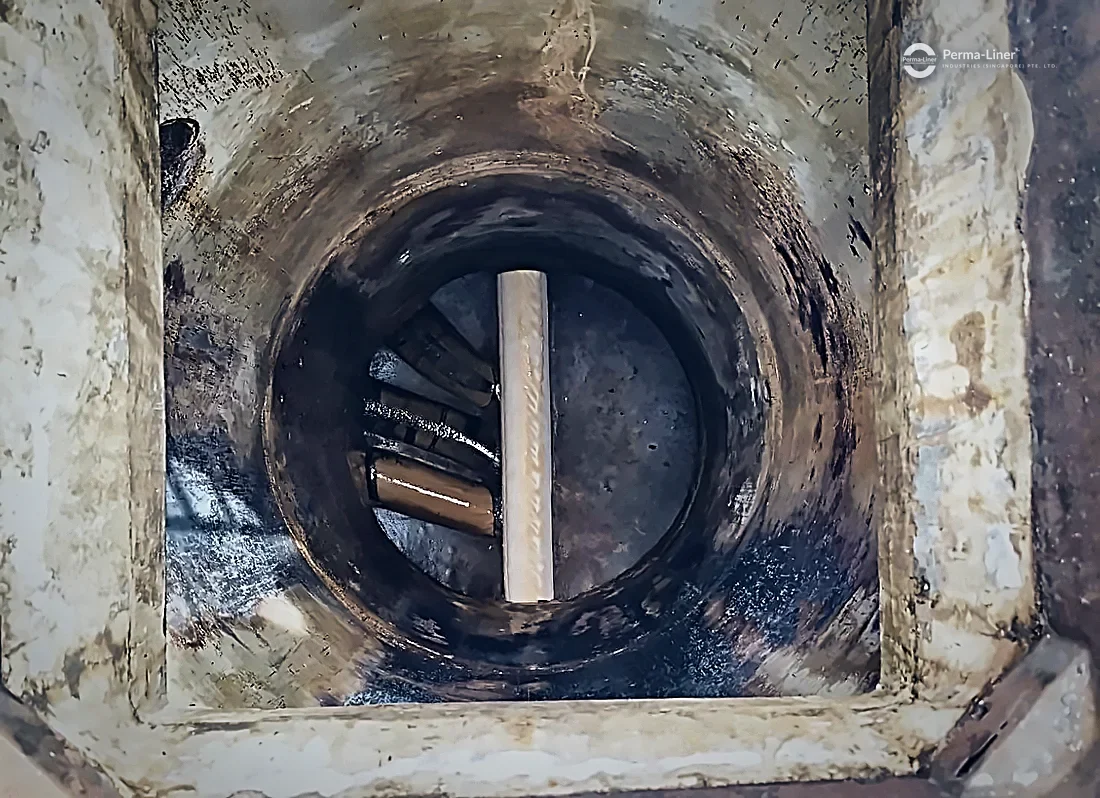
Once the liner has cured, the crew comes back to the intermediate manhole. There, the liner forms a closed tube running across the chamber, as the photo shows. The section inside the chamber is cut away and the liner ends are trimmed back to the chamber walls. Each end is then terminated and sealed to the host pipe, so the new liner and the manhole work together.
The final step is to reinstate the manhole and bring it back into service.
The whole job is done from existing manholes, with no open trench and a compact, barricaded work front.
If you have consecutive sewer lengths to renew, talk to us about whether they can be lined in a single installation.
Figures are taken from the project records. Client and site names are withheld.