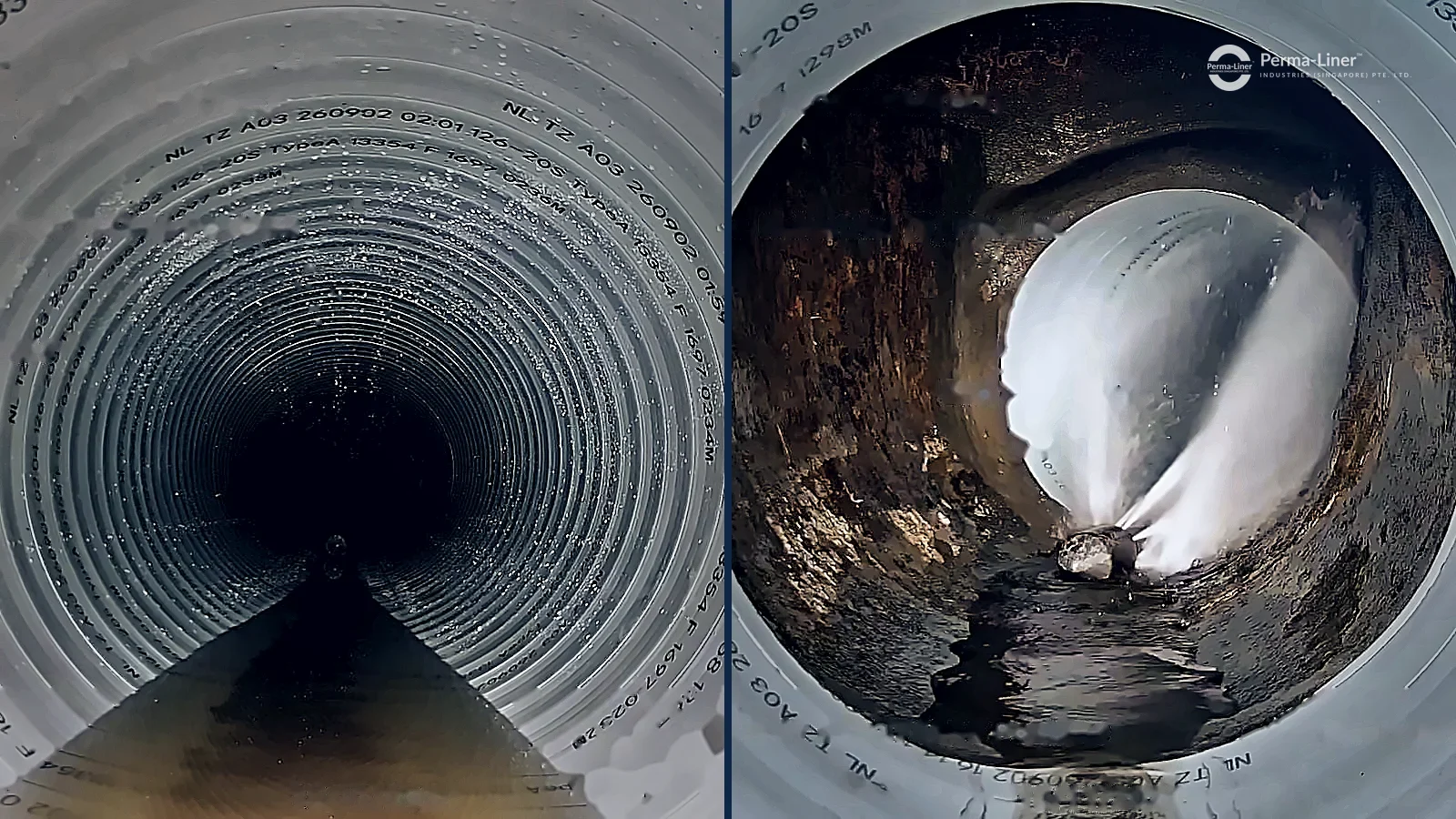
A cured-in-place pipe liner is designed on paper before it is installed. The design calculations set the wall thickness the liner needs to carry ground loads, groundwater and traffic for its design life. Those calculations are only as good as the material values behind them.
That is why we take QA/QC seriously. On all our major projects, we take samples of the installed liner and put them through mechanical testing in the laboratory, including a long-term test that runs for 10,000 hours.
Designing to ASTM F1216
Our liner designs follow the ASTM F1216 design calculations. The design uses the liner's flexural strength and flexural modulus, along with a long-term value of the modulus that allows for creep, the slow deformation of a material held under load over many years.
If the installed liner does not reach the values assumed in the design, the wall thickness on paper no longer means what it should. Testing closes that gap. It confirms that the liner in the ground matches the liner in the calculations.
Short-term mechanical tests
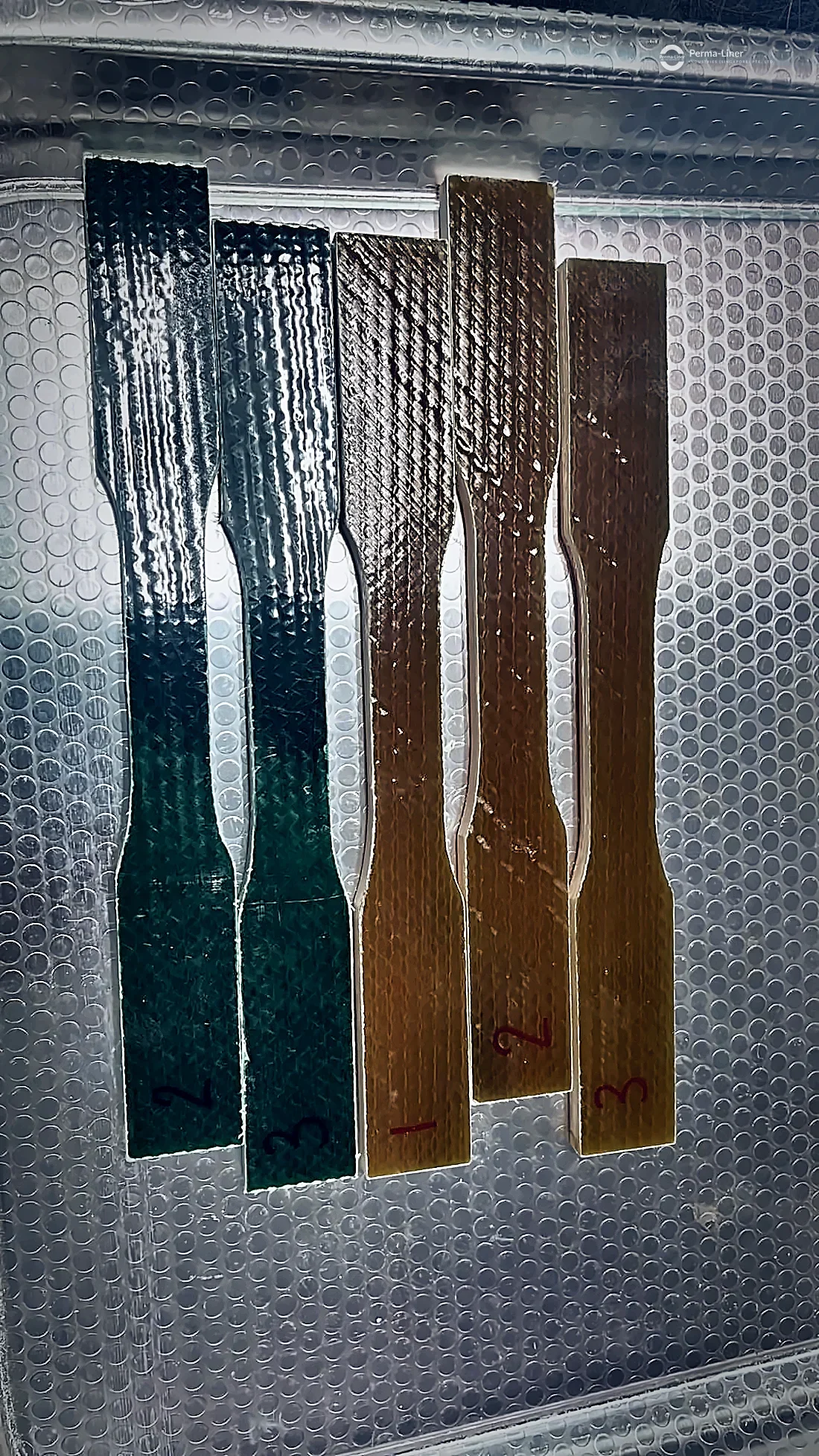
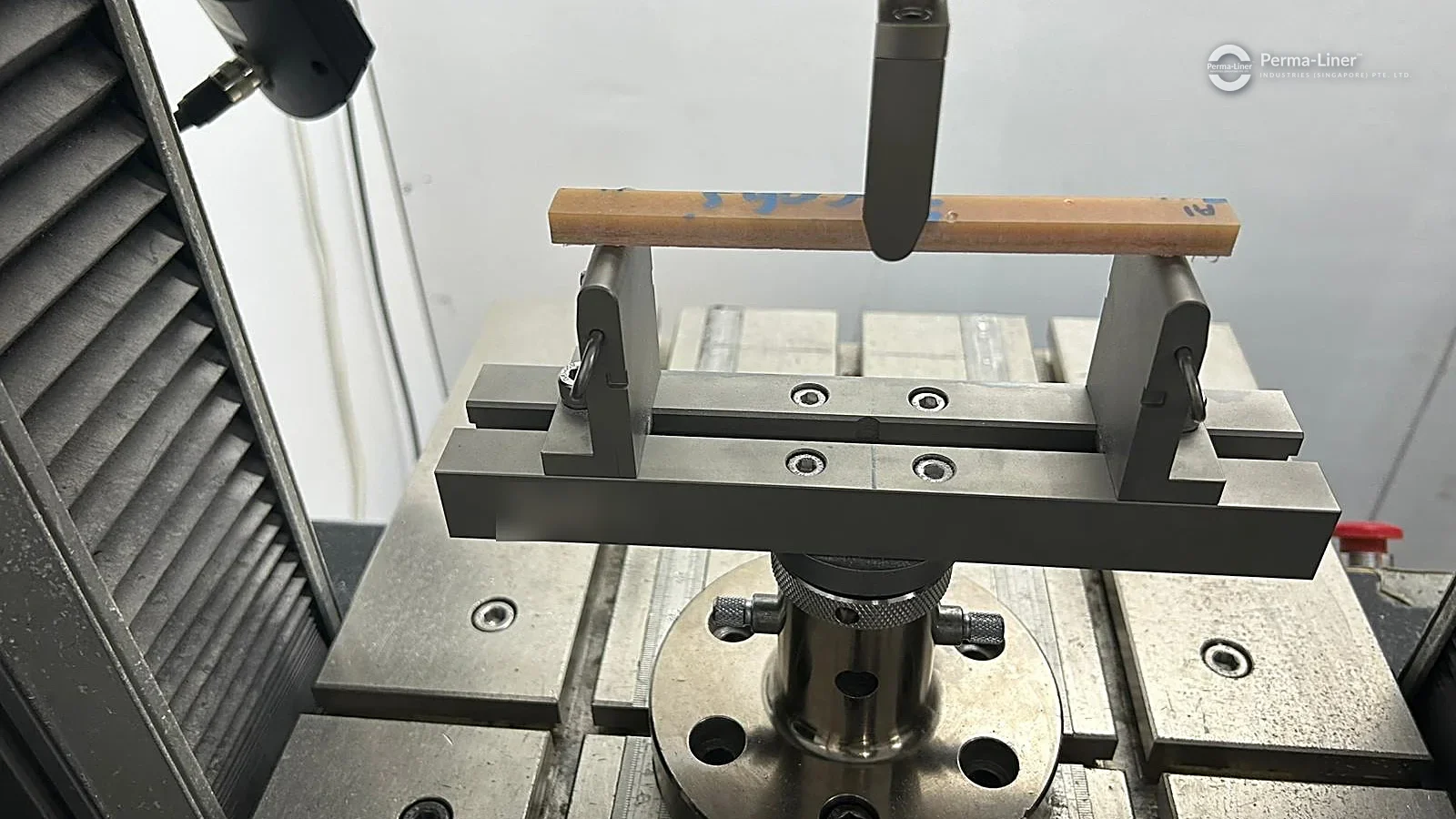
Samples are cut from the cured liner and prepared as test specimens. The flexural test is a three-point bend: a specimen is supported at both ends and loaded at the centre until it fails. This gives the flexural strength and the flexural modulus, the two values the design depends on most.
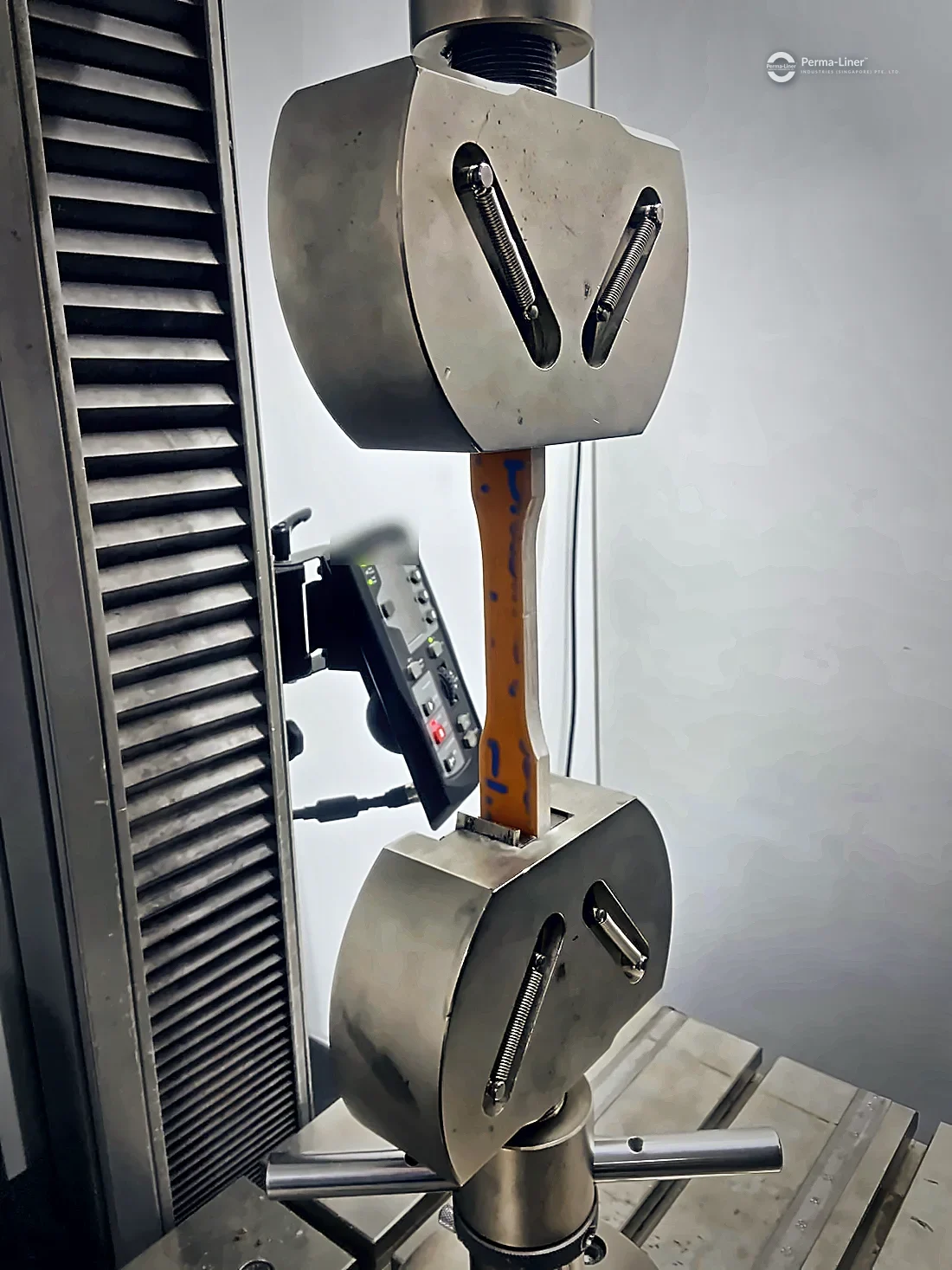
Tensile specimens, shaped like dog-bones, are pulled apart in a test frame to measure tensile strength. Together, these tests show whether the resin, the tube and the cure have come together as intended.
The 10,000-hour test
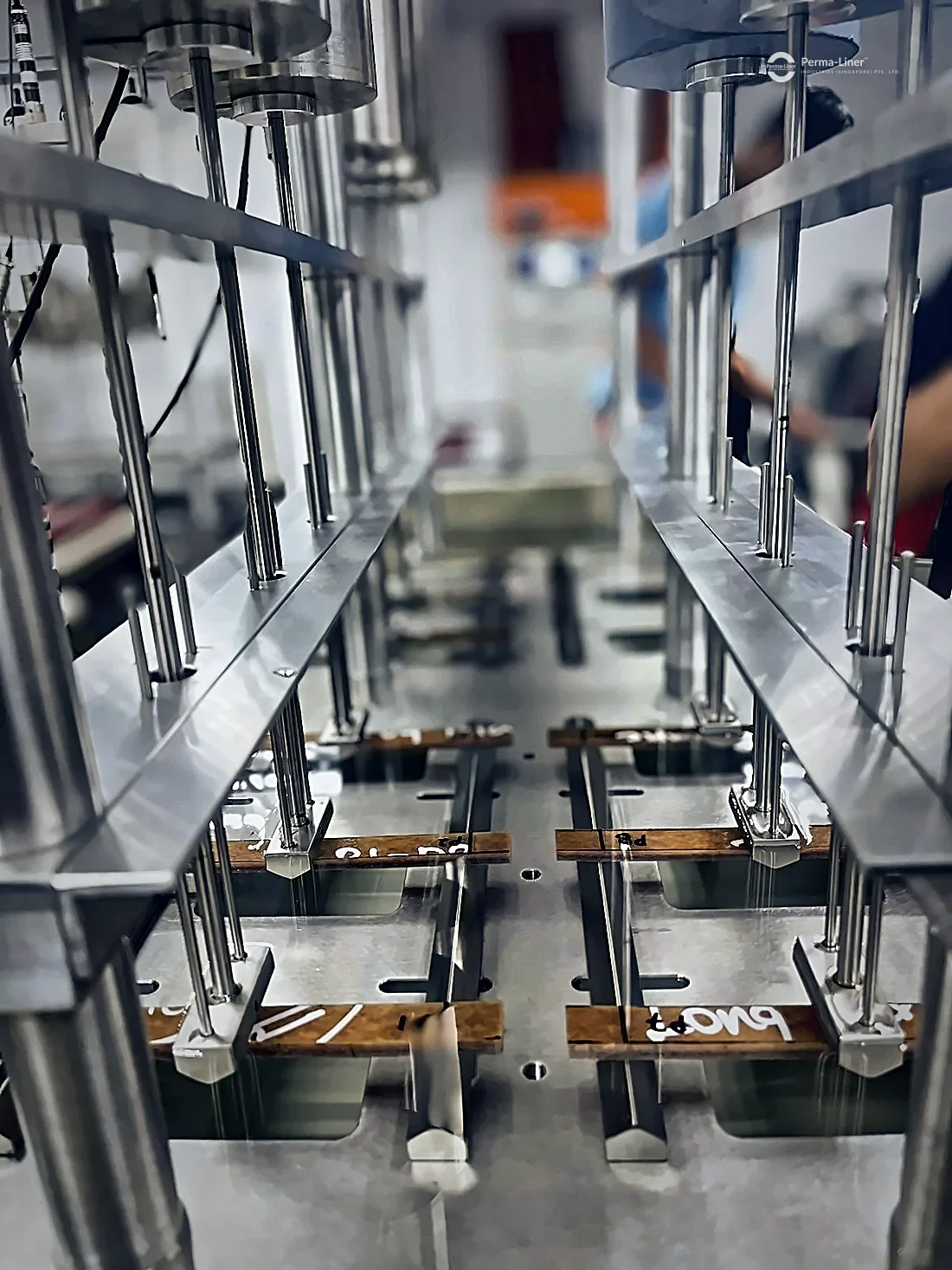
Short-term values tell you how the liner behaves today. A liner, however, is expected to perform for decades. For long-term behaviour, specimens are held under constant load in a creep rig and their deflection is recorded over 10,000 hours, which is more than a year of continuous testing.
The result shows how much of its stiffness the liner keeps over time. That is the value the long-term part of the design relies on, so we would rather measure it than assume it.
Meeting the minimum, and going beyond it
The design sets minimum values, and the test results have to meet them. Our aim is to do better than the minimum, so that the liner carries a margin above what the design requires.
For our clients, that is the value of the testing. It gives evidence, not just a certificate, that the rehabilitated pipe will perform as designed, and it becomes part of the quality record handed over at the end of the project.
If you would like to know more about how we design and test our liners, talk to us.