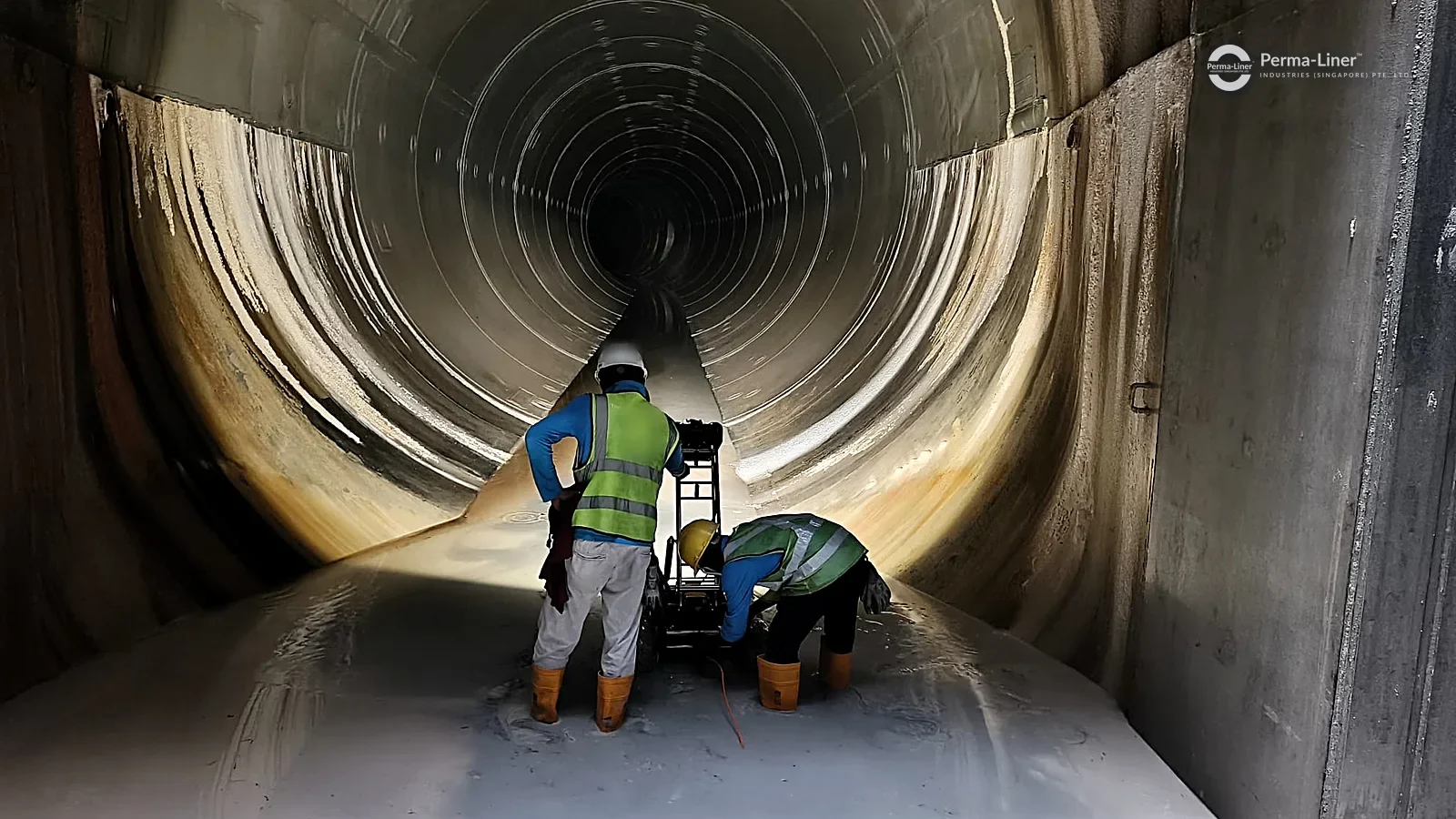
We recently carried out a pre-commissioning CCTV inspection of a large-diameter deep sewer tunnel. The tunnel is about 6,000 mm in diameter, and we surveyed about 1.5 km of it in a single continuous run.
This is the kind of work that rarely gets seen. Once a deep tunnel sewer is in service, it carries flow around the clock and is very difficult to enter again. The time to look closely is before that happens.
Why inspect before commissioning
A new tunnel is built, checked and handed over in stages. A pre-commissioning inspection is the last close look at the finished structure while it is still dry, empty and accessible.
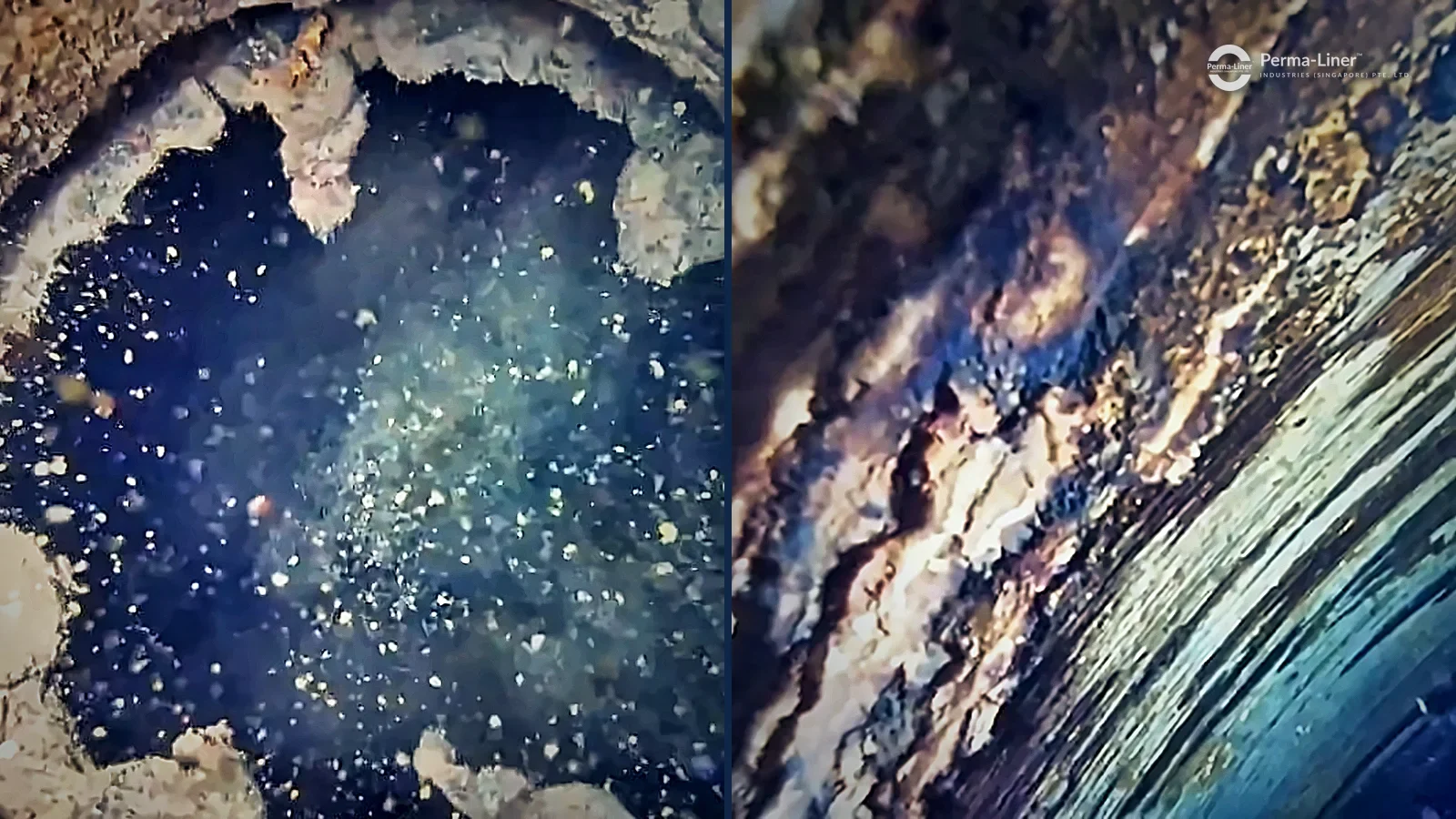
The survey records the condition of the lining, the joints and the invert along the full length. Anything that needs attention can be identified while it can still be dealt with in dry conditions, rather than after the tunnel is carrying sewage.
Just as important, the survey becomes a baseline. Every future inspection of the tunnel can be compared with this first record. That makes it much easier for the owner to tell how the asset is changing over time, and to plan maintenance on evidence rather than assumptions.
The challenge: a 6 m bore and a 1.5 km run
Most CCTV work happens in pipes that a person could not stand up in. Here the problem is the opposite. In a 6 m bore, the walls are a long way from the camera, and an ordinary pipe camera's lights and lens are not designed for that distance. The crown, the walls and the invert all need to be lit and seen clearly.
Distance is the other challenge. Surveying a long length in one continuous run means the crawler, the cable and the control system all have to work reliably over the whole length, with the recording unbroken from start to finish. A single run avoids stopping, relocating and restarting, and keeps the record continuous.
Access and set-up
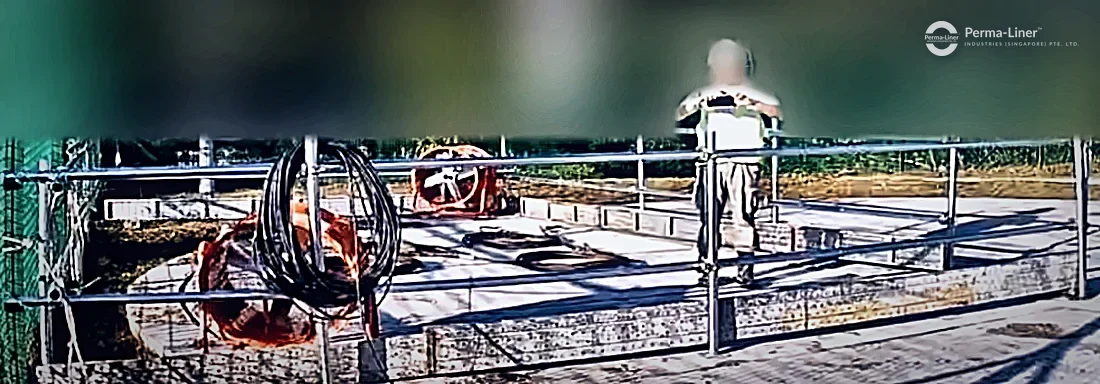
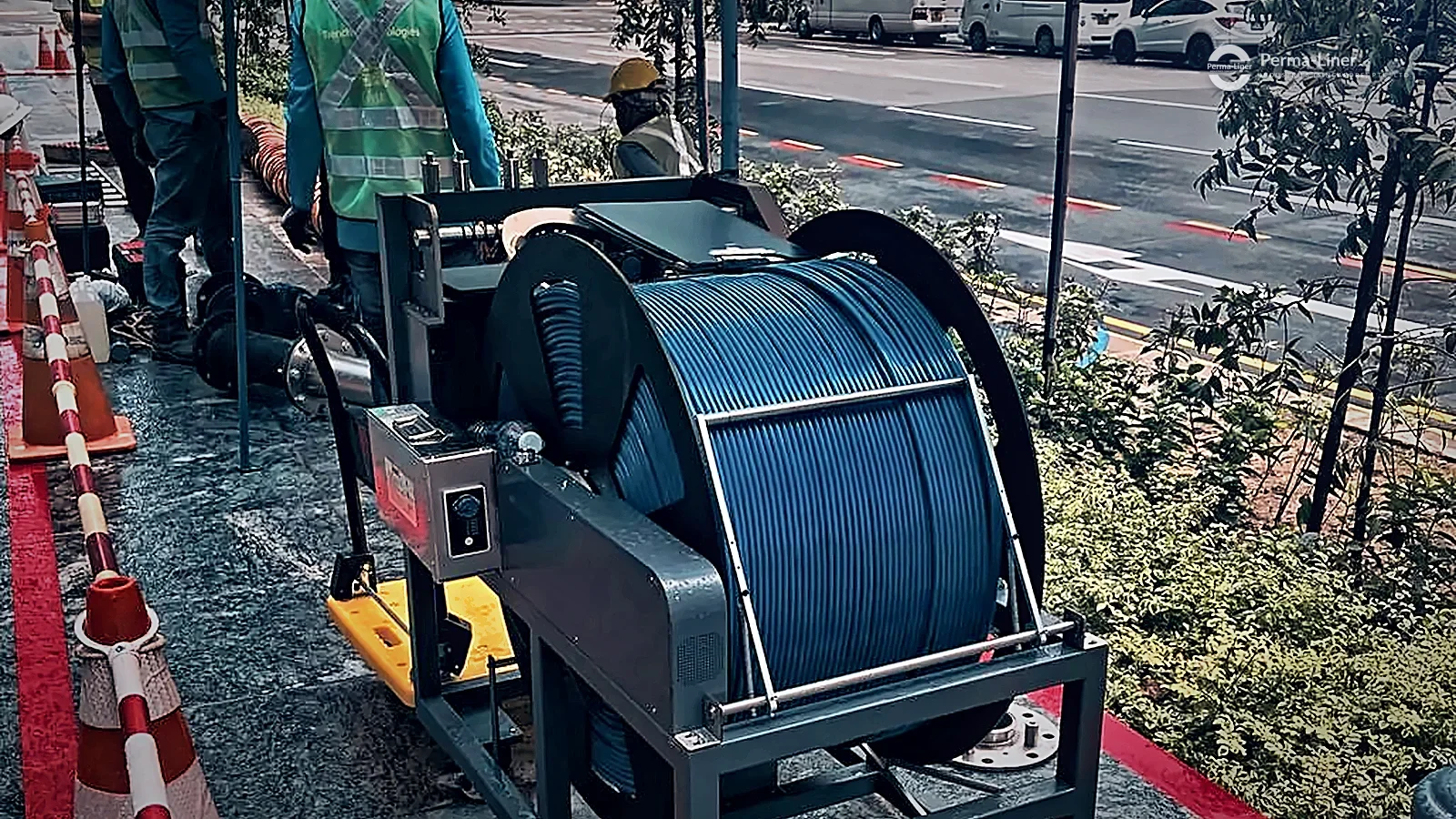
Access to a deep tunnel is through a shaft. At the surface, the shaft deck is barricaded, and the equipment and cable reels are staged around the opening before anything goes down.
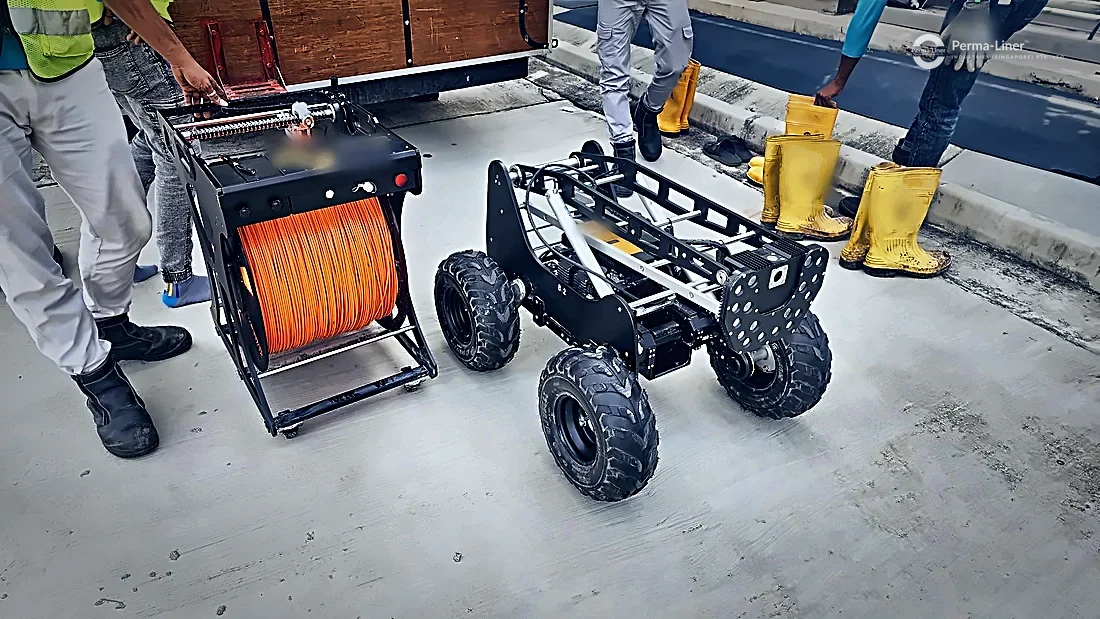
The crawler and the cable drum are lowered down the shaft to tunnel level. There, the crew assemble and check the system at the start of the run: the camera, the lighting, the cable connection and the distance counter. Only once everything is confirmed does the survey begin.
The inspection
We used a long-range robotic crawler with lighting suited to a large bore. It is driven along the tunnel invert under remote control, with the camera and lights set up to cover the crown, the walls and the invert as it travels.
The survey is recorded continuously, and the footage is logged against distance along the tunnel. The operator can slow down or stop wherever a feature needs a closer look, then carry on along the run. That way, every observation can be located later by its distance along the tunnel.
What the owner receives
At the end of the work, the owner receives the inspection report together with the continuous video record of the run. Observations are referenced to their distance along the tunnel, so they can be found again on site or compared with later surveys.
The report serves two purposes. In the short term, it supports the decision to commission the tunnel. In the long term, it is the reference point for the life of the asset.
Safety
Deep shaft access is confined-space work, and it is planned that way from the start. The approach covers the permit to work, gas monitoring and ventilation, controlled entry and exit, communication between the shaft top and the tunnel, and a rescue plan in place before anyone goes down.
Lifting the equipment down the shaft is planned as a lift in its own right. Using a remotely driven crawler for the survey itself also limits how long people need to spend deep in the tunnel.
If you have a large tunnel or a long sewer to inspect before handover, talk to us about planning the survey.